AI Agents in Business: Who Automates Workflows and What to Fear
Recent weeks have demonstrated the rapid spread of AI agents across key business domains: development, finance, and communication. Slack has introduced dedicated channels for collaborative work with agents — users can jointly work with Claude Code, Devin, Vercel Agent, and GitHub Copilot in an environment where agents participate in discussions and execute tasks via interfaces, but require oversight [1].
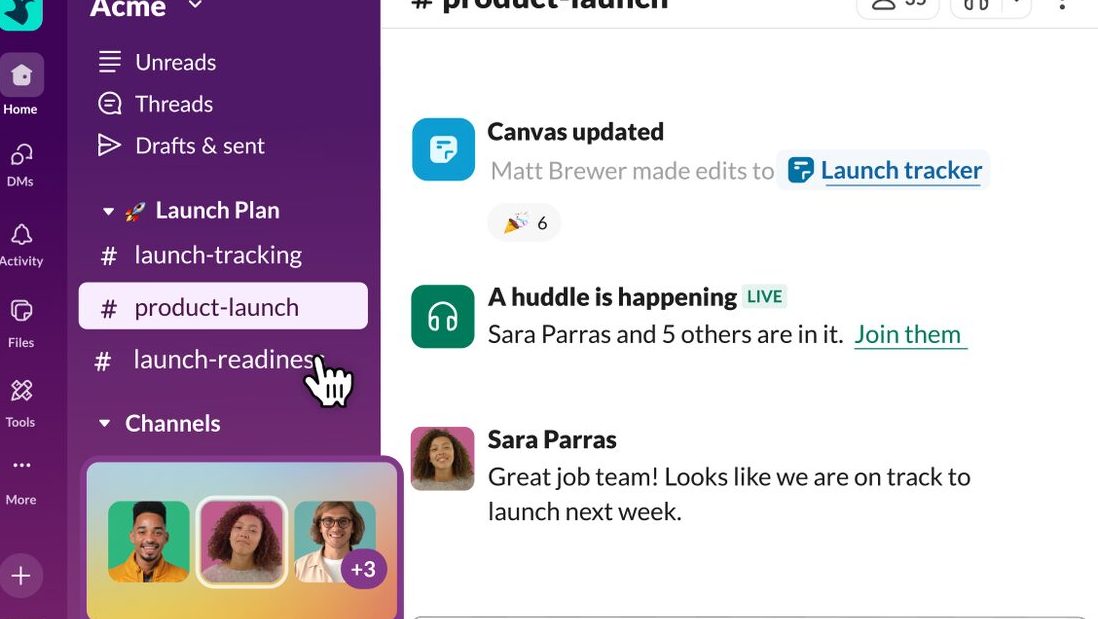
Recent weeks have demonstrated the rapid spread of AI agents across key business domains: development, finance, and communication. Slack has introduced dedicated channels for collaborative work with agents — users can jointly work with Claude Code, Devin, Vercel Agent, and GitHub Copilot in an environment where agents participate in discussions and execute tasks via interfaces, but require oversight [1].
Automation of Financial Operations
Binance has launched Agent OS — a platform that allows AI agents to connect to exchange accounts. Agents can monitor the market, check balances, analyze data, and, with user permission, autonomously trade cryptocurrencies [2]. This is the first large-scale case where AI gains direct access to financial operations with a limited permission mechanism.
Open Platforms and Competition
TrueFoundry open-sourced TrueForge — an alternative to Anthropic’s Claude Managed Agents. Openness allows developers to use multiple models and build their own agent systems, without being locked into a single vendor [3]. This is a significant step toward decentralizing the AI agent market.
Competition Among Players
SpaceX’s Elon Musk attempted to acquire the AI startup Cognition, but was refused [4]. This reflects growing interest from large companies in AI agents as strategic assets. Meanwhile, Anthropic expanded Claude’s capabilities — it can now independently send emails to Gmail without additional confirmation [5].
What This Means for Business
Integrating AI agents is no longer a question of “when,” but “how.” Companies of all sizes are beginning to use agents for coding, finance, and communication. However, it’s crucial to establish clear boundaries: permissions, logging, and oversight of agent actions. Open platforms like TrueForge allow flexible adaptation, but require internal expertise. Competition among vendors — Claude, Devin, Copilot — helps keep prices down and drives innovation, but demands careful selection of approach.
Key trend: AI agents are transitioning from辅助 tools to autonomous executors. Those who integrate quickly gain an advantage. Those who ignore it risk falling behind.
💡 Need help with your article topic? Learn about our service — AI process audit.
Author: Andrew Syromyatnikov · Founder of InfoCombiner
This article was drafted with AI assistance and reviewed by our editorial team. Editorial Policy